
Kyoto through the year at a glance
There is no single best time to visit Kyoto. Spring and autumn are the seasons most people aim for, and they are also the busiest periods: cherry blossom season from late March to early April, and autumn leaf season from mid November to early December. Summer is hot and humid, winter is cool and calmer, and June brings the rainy season.
Pick your season by what you want to see and how much crowding you accept. If you travel in a peak season, start early. An early morning Kyoto tour or a guided day tour can help you reach the famous temples before the main crowds and without planning every bus connection yourself.
Kyoto weather by month
Long-term averages for Kyoto city, period 1991 to 2020. These are normals, not a forecast for 2026 or 2027.
| Month | Average high | Average low | Precipitation |
|---|---|---|---|
| January | 9.1 °C | 1.5 °C | 53.3 mm |
| February | 10.0 °C | 1.6 °C | 65.1 mm |
| March | 14.1 °C | 4.3 °C | 106.2 mm |
| April | 20.1 °C | 9.2 °C | 117.0 mm |
| May | 25.1 °C | 14.5 °C | 151.4 mm |
| June | 28.1 °C | 19.2 °C | 199.7 mm |
| July | 32.0 °C | 23.6 °C | 223.6 mm |
| August | 33.7 °C | 24.7 °C | 153.8 mm |
| September | 29.2 °C | 20.7 °C | 178.5 mm |
| October | 23.4 °C | 14.4 °C | 143.2 mm |
| November | 17.3 °C | 8.4 °C | 73.9 mm |
| December | 11.6 °C | 3.5 °C | 57.3 mm |
The figures apply to the city. The Tango coast around Amanohashidate and the mountain areas in the north of the prefecture have their own climate, so pack an extra layer for trips to Amanohashidate and Ine or Miyama.
Our pick: Fushimi Inari in the evening
A guided evening walk for the warm months, when you want to avoid heat and crowds in the daytime.
Hand-picked tours, booked through Viator. Prices are indicative starting prices in US dollars (as of October 2026). Tap a tour for live availability and the current price in your currency.
Kyoto tours for every season
Early morning tours, guided day tours and evening walks in Kyoto, with live prices and availability.
Sakura in Kyoto: cherry blossom season
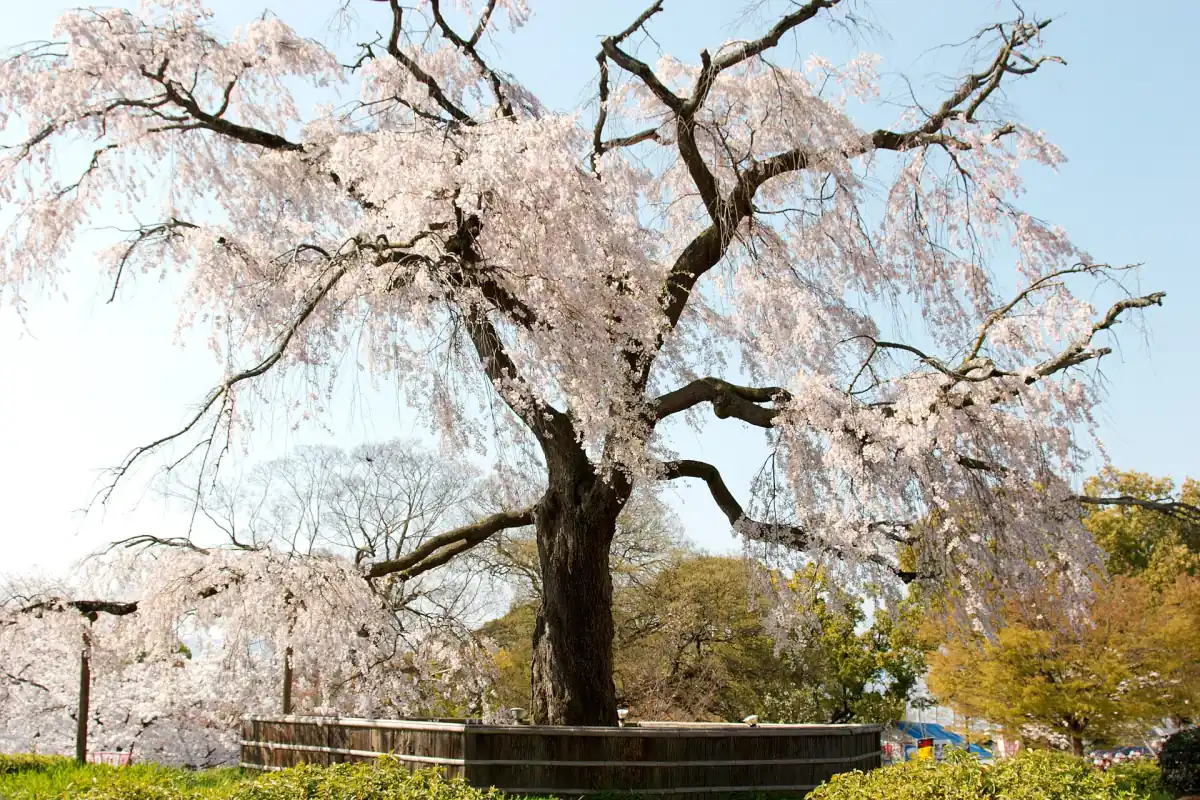
For the cherry reference tree in Kyoto, the long-term average date of the first blossoms is 26 March and full bloom comes around 4 April. These are averages from 1991 to 2020. In a given year the trees can open earlier or later, and gardens across the city do not bloom on the same day. Plan a stay that covers several days around early April rather than a single fixed date.
Average highs rise from 14.1 °C in March to 20.1 °C in April, so days are mild and evenings can be cool. Sakura season is one of the two busiest times of the year. Book accommodation early, use trains where you can and expect queues at well known temples. On the where to stay page you will find the areas that are easiest to move around from.
The famous hillside temple in Higashiyama has its own season guide on the Kiyomizu-dera site.
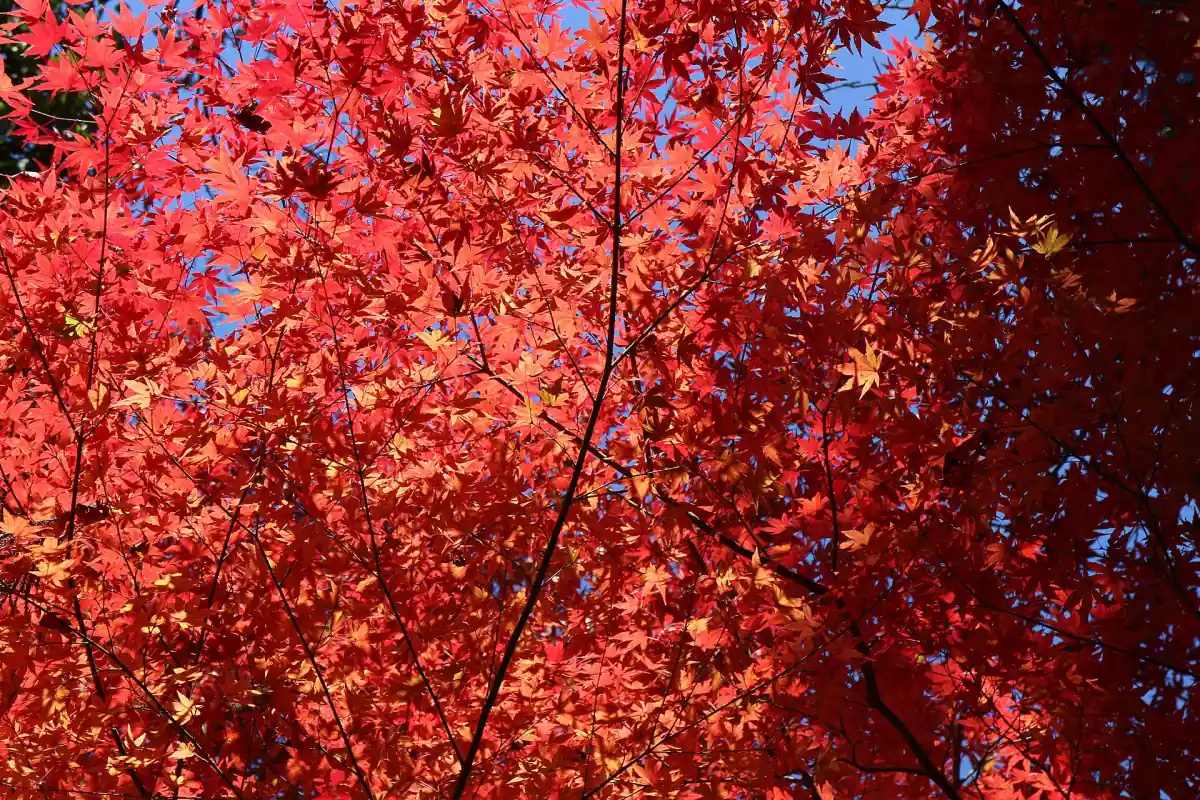
Autumn leaves from mid November
Autumn leaf season is the second big peak. It runs roughly from mid November to early December, and there is no guarantee for the colour on any given day. November is pleasant for walking, with an average high of 17.3 °C and an average low of 8.4 °C, and it is drier than the months before.
Eikan-do and other autumn viewing spots
Eikan-do near the Philosopher's Path is a temple with a special autumn opening. In autumn 2026 the temple holds a special daytime opening from 11 November to 6 December for ¥1,500 per adult, and a separate night viewing from 20 November to 6 December, 5:30 p.m. to 8:30 p.m., for ¥1,000. Day and night tickets are separate, and tickets are sold on the day only. The walk from Ginkaku-ji and the Philosopher's Path to Nanzen-ji passes several more temples with maples.
In the busy autumn weeks the city runs extra crowd measures on its buses, including changed stops and diversions on weekends. Check the current bus information before you set off, and consider the subway or the train for longer trips across the city.

Summer: rainy season and heat
The rainy season in the Kinki region runs on average from about 6 June to 19 July. June and July are the wettest months in the table, with around 200 mm and 224 mm of rain. After that comes the heat: average daily highs of 32.0 °C in July and 33.7 °C in August, and individual days can be hotter. Plan temple visits for the morning, carry water and keep the afternoon for museums or rest.
Summer has its own highlights. The Gion Matsuri fills July, with the large float processions on 17 and 24 July. On 16 August the Gozan no Okuribi bonfires burn on the hills around the city. From 1 May to 15 October, restaurants along the west bank of the Kamo River set up wooden dining terraces, and in Kibune the riverside terraces run from May to September. More dates are on the festivals page.
Kyoto in winter
Winter is a calmer season in the city. January averages a high of 9.1 °C and a low of 1.5 °C, and it is the driest month in the table. Gardens and temples are calmer, and early morning light is clear on cold days. Snow in the city is never certain.
In the north of the prefecture, the thatched village of Miyama holds a snow lantern festival in winter. The next edition is planned for 30 January to 6 February 2027, with lights from 5 p.m. to 7 p.m. and all parking by reservation. Snow is not guaranteed there either. In the city, the evening culture show at Gion Corner runs in a winter format from 1 December to 11 March, Tuesday to Friday.
Which season suits which trip
A quick comparison for first planning. Peak periods change slightly every year.
| Season | What you get | Crowds | Good for |
|---|---|---|---|
| Late March to early April | Cherry blossoms, mild days | One of the two busiest periods | First visit, photography |
| May | Green gardens, Aoi Matsuri on 15 May | – | Walking, festivals |
| June to mid July | Rainy season, humid days | – | Museums, flexible travellers |
| Mid July to August | Heat, Gion Matsuri, Okuribi | Busy on festival days | Festival fans |
| Mid November to early December | Autumn leaves | One of the two busiest periods | Temples and gardens |
| January and February | Cool, calm, Miyama lanterns | Usually calmer | Quiet temples, lower stress |
For most first time visitors who can choose freely, late March to early April or mid November to early December give Kyoto at its most colourful. If you dislike crowds, January and February are usually calmer.
Plan the rest of your trip
Once you know your season, these pages help with the next steps.
Best time to visit Kyoto: questions
When do the cherry blossoms bloom in Kyoto?
On average, the cherry reference tree in Kyoto shows its first blossoms around 26 March and reaches full bloom around 4 April (normals for 1991 to 2020). Each year differs, so allow a few days of flexibility.
When are the autumn leaves at their best?
Autumn leaf season in Kyoto runs roughly from mid November to early December. The colour depends on the weather of the year and on the place, so there is no fixed date.
When is Kyoto least crowded?
The two busiest periods are cherry blossom season and autumn leaf season. January and February are usually calmer, and early mornings are quieter in every season.
When is the rainy season in Kyoto?
The Kinki region's rainy season runs on average from about 6 June to 19 July. June and July are the wettest months, with roughly 200 mm and 224 mm of rain.
How hot is Kyoto in summer?
The average daily high is 32.0 °C in July and 33.7 °C in August, with warm nights around 24 °C. Plan outdoor sights for the morning and drink enough water.